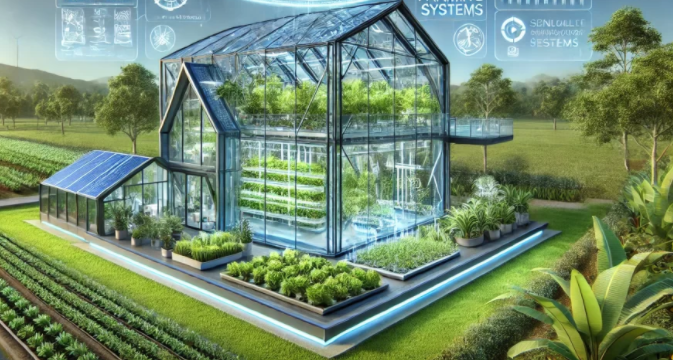
Smart Greenhouses of the Future: Where Technology Meets Nature
🌱 What Are Smart Greenhouses?
Smart greenhouses are digitally enhanced growing environments that use sensors, automation, and artificial intelligence to optimize plant growth. Unlike traditional greenhouses, which rely heavily on manual monitoring, smart greenhouses integrate advanced technologies to create self-regulating ecosystems.
🛰️ Key Features of Smart Greenhouses
- IoT Sensors: Monitor soil moisture, temperature, humidity, and nutrient levels in real time.
- Automated Climate Control: AI systems adjust ventilation, heating, and cooling to maintain ideal conditions.
- LED Lighting Systems: Smart lighting mimics natural sunlight and adjusts intensity based on crop needs.
- Robotics and Drones: Automate planting, harvesting, and pest detection.
- Data Analytics: Predict crop yields, detect diseases early, and optimize resource use.
- Renewable Energy Integration: Solar panels and geothermal systems power operations sustainably.
🚀 Benefits of Smart Greenhouses
- Year-round production: Controlled environments allow continuous harvests regardless of climate.
- Resource efficiency: Precision irrigation and nutrient delivery reduce water and fertilizer use.
- Higher yields: Optimized conditions lead to faster growth and healthier crops.
- Reduced labor costs: Automation minimizes manual work while improving accuracy.
- Sustainability: Smart systems lower carbon footprints and support eco-friendly farming to faster growth and healthier crops.
- Reduced labor costs: Automation minimizes manual work while improving accuracy.
- Sustainability: Smart systems lower carbon footprints and support eco-friendly farming.
🌍 Global.
🌍 Global Examples
- Netherlands: Pioneering smart greenhouse clusters use AI Examples
- Netherlands: Pioneering smart greenhouse clusters use AI and robotics to produce vegetables with minimal inputs and robotics to produce vegetables with minimal inputs.
- China:.
- China: Large-scale smart greenhouses integrate Large-scale smart greenhouses integrate solar energy and advanced climate control for staple solar energy and advanced climate control for staple crops.
- United States: Agritech crops.
- United States: Agritech startups are developing AI-driven green startups are developing AI-driven greenhouses for urban farming.
- **houses for urban farming.
- Middle East: SmartMiddle East:** Smart greenhouses combat desert conditions, producing fresh vegetables in arid regions.
greenhouses combat desert conditions, producing fresh vegetables in arid regions.
⚖️ Challenges Ahead ⚖️ Challenges Ahead
- High initial costs: Advanced systems require significant investment.
- Technical expertise: Farmers need training to manage digital tools effectively.
- Energy demand: Smart systems can be power-intensive without renewable integration.
- Accessibility: Smallholder farmers may struggle to adopt these technologies without subsidies or partnerships manage digital tools effectively.
- Energy demand: Smart systems can be power-intensive without renewable integration.
- Accessibility: Smallholder farmers may struggle to adopt these technologies without subsidies or partnerships.
🌟 The Future.
🌟 The Future Vision
Smart green Vision Smart greenhouses of the futurehouses of the future will be autonomous ecosystems—powered by renewable energy, guided by AI, and connected to global food networks. Imagine urban rooftops covered with intelligent greenhouses, rural farms producing crops with zero waste, and communities enjoying fresh produce grown sustainably all year round. These innovations will redefine agriculture, making food production smarter, greener, and more resilient.

DONATE & HELP FEED THE WORLD- PRESS THE LINK BELOW AND DONATE- https://www.paypal.com/donate/?hosted_button_id=XBTLE4H5G322N
Your support helps AgriHelpAfrica share sustainable farming practices with the world, one post at a time. Together, we can cultivate resilience, empower farmers, and grow a future where agriculture thrives and feed’s the world .
 AGRIHELPAFRICA
Leave a comment