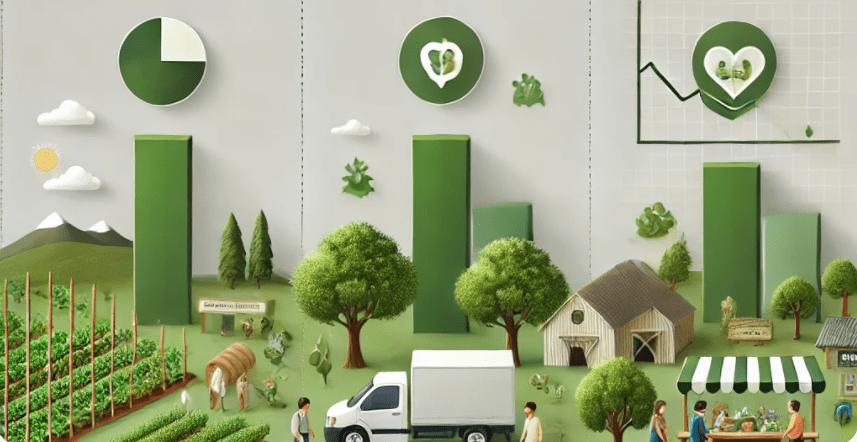
Government Policies on Sustainable Farming: Building a Greener Future
🌱 Why Sustainable Farming Needs Policy Support
Sustainable farming focuses on practices that protect the environment, conserve resources, and ensure long-term food security. While farmers play a central role, government policies are critical in shaping incentives, regulations, and frameworks that make sustainability achievable and scalable.
🏛️ Key Policy Areas Driving Sustainable Farming
- Subsidies and Incentives
- Governments provide financial support for farmers adopting eco-friendly practices such as organic farming, crop rotation, and reduced chemical use.
- Carbon credit schemes reward farmers for soil carbon sequestration and regenerative practices.
- Research and Innovation
- Funding for agricultural research promotes climate-smart technologies, drought-resistant crops, and precision farming tools.
- Public-private partnerships accelerate innovation in sustainable agriculture.
- Regulations and Standards
- Policies limit harmful pesticides and fertilizers, encouraging safer alternatives.
- Certification programs (organic, fair trade, eco-labels) help consumers identify sustainably produced food.
- Infrastructure and Market Access
- Investments in rural infrastructure—roads, storage, and irrigation—reduce post-harvest losses.
- Governments support local markets and cooperatives to strengthen farmer incomes.
- Education and Extension Services
- Training programs equip farmers with knowledge on soil health, water conservation, and biodiversity protection.
- Digital platforms provide real-time weather and market updates.
🌍 Global Examples of Policy Success
- European Union: The Common Agricultural Policy (CAP) ties subsidies to environmental outcomes, promoting regenerative farming.
- India: Government schemes support organic farming clusters and provide certification assistance.
- United States: Programs like the Conservation Reserve Program pay farmers to restore ecosystems on marginal lands.
- Africa: Policies in countries like Kenya and Ethiopia encourage agroforestry and climate-smart agriculture.
⚖️ Challenges Ahead
- Balancing productivity and sustainability: Farmers need assurance that eco-friendly practices won’t reduce yields.
- Equity: Smallholder farmers often struggle to access subsidies and certification programs.
- Monitoring: Ensuring compliance with sustainability standards requires robust tracking systems.
- Global coordination: Policies must align across borders to address climate change effectively.
🌟 The Future Vision
Government policies on sustainable farming are paving the way for a climate-resilient food system. Imagine a world where subsidies reward soil regeneration, where farmers access real-time data to optimize resources, and where consumers trust eco-labels to guide their choices. With strong policy frameworks, sustainable farming can move from niche practice to mainstream reality—feeding populations while healing the planet.

DONATE & HELP FEED THE WORLD- PRESS THE LINK BELOW AND DONATE- https://www.paypal.com/donate/?hosted_button_id=XBTLE4H5G322N
Your support helps AgriHelpAfrica share sustainable farming practices with the world, one post at a time. Together, we can cultivate resilience, empower farmers, and grow a future where agriculture thrives and feed’s the world .


Leave a Reply