🌾 Drought-Resistant Crop Varieties for Smallholders: Securing Yields in a Changing Climate
Why Drought-Resistant Crops Matter
Across Africa, smallholder farmers face increasing challenges from climate change, erratic rainfall, and prolonged dry spells. With over 60% of the population relying on agriculture for livelihoods, drought-resistant crops are not just an option—they are a necessity for food security and income stability.
🌱 Top Drought-Resistant Crop Varieties
1. Sorghum
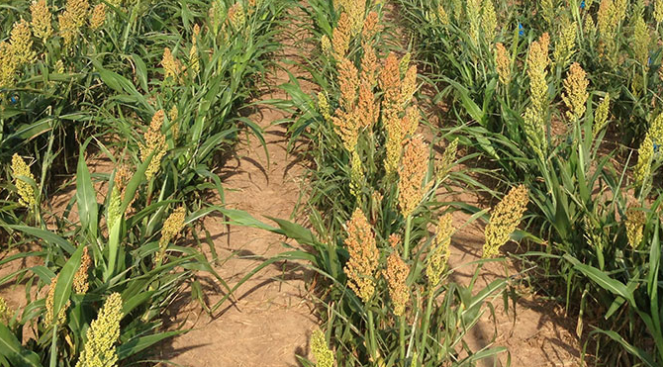
- Thrives in hot, dry conditions with minimal water.
- Used for food, fodder, and brewing industries.
- Improved varieties like Macia and Seredo are widely adopted in Southern Africa.
2. Millet
- Highly tolerant to drought and poor soils.
- Provides nutritious grain rich in iron and calcium.
- Finger millet and pearl millet are popular among smallholders.
3. Cowpeas
- Dual-purpose crop: food and livestock fodder.
- Fixes nitrogen, improving soil fertility.
- Short maturity period makes it ideal for unpredictable rains.
4. Pigeon Pea
- Deep-rooted legume that withstands dry spells.
- Provides protein-rich food and improves soil health.
- Popular in semi-arid regions of East and Southern Africa.
5. Cassava
- Extremely drought-tolerant root crop.
- Can survive poor soils and delayed rains.
- Provides food security during lean seasons.
6. Drought-Tolerant Maize
- Improved hybrids developed by CIMMYT and local seed companies.
- Varieties like ZMS 606 and ZM 521 are adapted to Zimbabwe’s dry regions.
- Offers higher yields compared to traditional maize under water stress.
🌍 Best Practices for Smallholders
- Diversify crops: Mix cereals, legumes, and root crops to spread risk.
- Use conservation agriculture: Mulching, minimum tillage, and crop rotation improve soil moisture.
- Adopt early planting: Planting at the onset of rains maximizes water use.
- Leverage local seed banks: Access community-based drought-tolerant varieties.
- Integrate agroforestry: Trees provide shade, reduce evaporation, and improve soil fertility.
📈 Benefits for Farmers
- Stable yields even during drought years.
- Improved household nutrition through diverse crops.
- Resilient incomes from surplus sales.
- Enhanced soil health with legumes and conservation practices.
✅ Key Takeaway
For smallholder farmers, drought-resistant crops are a lifeline in the face of climate uncertainty. By adopting sorghum, millet, cowpeas, pigeon pea, cassava, and drought-tolerant maize, alongside smart farming practices, farmers can secure food and income while building resilience for the future.

DONATE & HELP FEED THE WORLD- PRESS THE LINK BELOW AND DONATE- https://www.paypal.com/donate/?hosted_button_id=XBTLE4H5G322N
Your support helps AgriHelpAfrica share sustainable farming practices with the world, one post at a time. Together, we can cultivate resilience, empower farmers, and grow a future where agriculture thrives and feed’s the world .


Leave a Reply