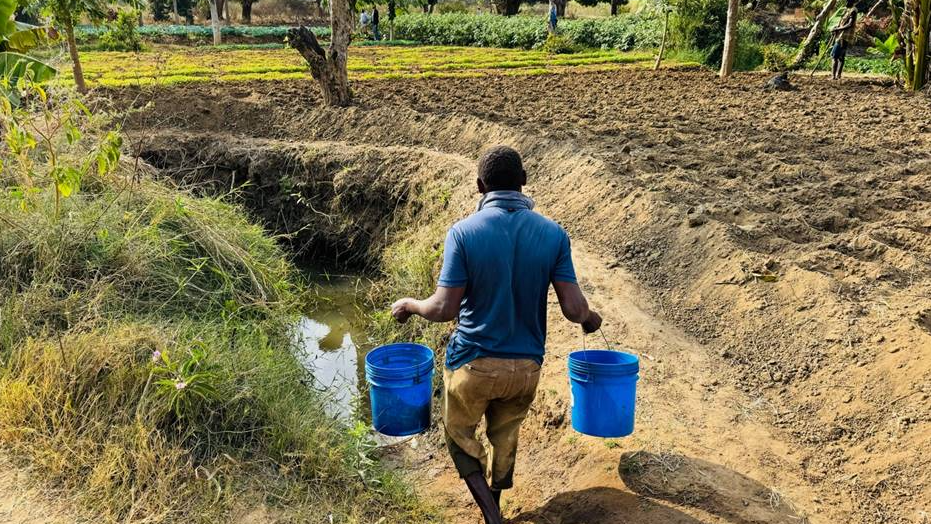
💧 Water Harvesting Techniques for Dry Regions: Practical Solutions for Farmers
Why Water Harvesting Matters
In dry regions across Africa and beyond, water scarcity is the biggest barrier to agricultural productivity. Erratic rainfall, prolonged droughts, and climate change make it difficult for smallholder farmers to sustain crops and livestock. Water harvesting—capturing and storing rainwater or runoff—is a proven solution to secure water for farming, household use, and community resilience.
🌱 Key Water Harvesting Techniques
1. Rainwater Harvesting
- Collecting rainwater from rooftops into tanks or reservoirs.
- Affordable and scalable for households and schools.
- Stored water can be used for irrigation, livestock, or domestic needs.
2. Contour Bunds & Terraces
- Soil bunds built along contours slow down water runoff.
- Terracing reduces erosion and increases water infiltration.
- Widely used in Zimbabwe’s hilly regions to conserve soil and water.
3. Check Dams & Sand Dams
- Small barriers across seasonal streams capture water.
- Sand dams store water within sand layers, reducing evaporation.
- Provide year-round water for irrigation and livestock.
4. Zai Pits (Planting Basins)
- Traditional technique from West Africa, now spreading globally.
- Small pits filled with organic matter capture rainwater and concentrate fertility.
- Boosts yields of maize, sorghum, and millet in semi-arid areas.
5. Mulching & Conservation Agriculture
- Covering soil with crop residues reduces evaporation.
- Improves soil moisture retention and fertility.
- Works best when combined with minimum tillage and crop rotation.
6. Underground & Subsurface Tanks
- Storing water underground reduces evaporation losses.
- Can be lined with cement or plastic to prevent seepage.
- Ideal for community-level water security.
7. Drip Irrigation with Harvested Water
- Efficiently delivers water directly to plant roots.
- Reduces wastage compared to flood irrigation.
- Solar-powered pumps make this system affordable for smallholders.
📈 Benefits for Farmers
- Reliable water supply during dry spells.
- Improved crop yields and food security.
- Reduced soil erosion and land degradation.
- Lower costs compared to relying on boreholes or external water sources.
🌍 Zimbabwe & Regional Context
In Zimbabwe’s Midlands and Matabeleland regions, farmers are increasingly adopting contour ridges, zai pits, and rainwater harvesting tanks to cope with erratic rainfall. These techniques are low-cost, farmer-friendly, and adaptable to smallholder realities. Globally, similar practices are being promoted in India, Kenya, and Ethiopia—showing their universal relevance.

DONATE & HELP FEED THE WORLD- PRESS THE LINK BELOW AND DONATE- https://www.paypal.com/donate/?hosted_button_id=XBTLE4H5G322N
Your support helps AgriHelpAfrica share sustainable farming practices with the world, one post at a time. Together, we can cultivate resilience, empower farmers, and grow a future where agriculture thrives and feed’s the world .


Leave a Reply