Blockchain in Food Supply Chains: Building Trust from Farm to Fork
🌱 Why Blockchain Matters in Agriculture
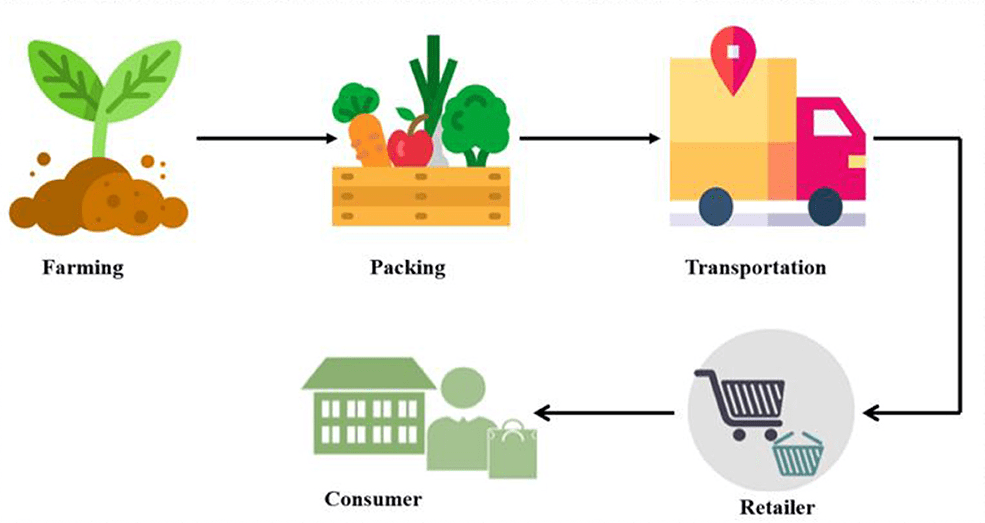
Food supply chains are complex, involving farmers, distributors, retailers, and consumers. Along the way, issues like fraud, food safety, and inefficiency can arise. Blockchain technology—a decentralized, transparent ledger system—offers a way to track every step of the journey, ensuring trust and accountability.
🔗 How Blockchain Works in Food Supply Chains
- Immutable records: Every transaction (from planting to shipping) is recorded and cannot be altered.
- Transparency: Stakeholders can see the entire history of a product, from farm to shelf.
- Traceability: If contamination or fraud occurs, blockchain helps identify the source quickly.
- Smart contracts: Automated agreements streamline payments and logistics, reducing delays.
🚜 Applications in Agriculture
- Farm-to-table tracking: Consumers scan QR codes to see where their food was grown, harvested, and processed.
- Fair trade verification: Blockchain ensures farmers receive fair compensation by recording transactions transparently.
- Organic certification: Authenticity of organic and eco-labels is verified through blockchain records.
- Cold chain monitoring: Sensors record temperature data for perishable goods, stored securely on the blockchain.
🌍 Success Stories
- Walmart & IBM Food Trust: Used blockchain to trace mangoes and pork in seconds, improving food safety.
- Nestlé & Carrefour: Consumers in Europe can scan QR codes to trace milk and baby food origins.
- Coffee cooperatives in Latin America: Blockchain ensures fair trade and transparent payments to smallholder farmers.
- Seafood industry in Asia: Blockchain tracks fish from ocean to plate, combating illegal fishing.
🌱 Benefits of Blockchain in Food Supply Chains
- Food safety: Rapid identification of contamination sources reduces health risks.
- Consumer trust: Shoppers gain confidence in product authenticity and sustainability claims.
- Efficiency: Automated contracts and transparent records reduce paperwork and delays.
- Farmer empowerment: Smallholders gain visibility and fairer market access.
- Sustainability: Blockchain supports eco-labels and carbon footprint tracking.
⚖️ Challenges Ahead
- Cost barriers: Implementing blockchain systems can be expensive for small-scale farmers.
- Digital divide: Limited internet access in rural areas hinders adoption.
- Standardization: Different blockchain platforms need harmonization for global trade.
- Data accuracy: Blockchain records are only as reliable as the data inputted.
🌟 The Future Vision
By 2030, blockchain could make food supply chains fully transparent and resilient. Imagine scanning a tomato at the supermarket and instantly seeing its farm, harvest date, transport route, and carbon footprint. Blockchain doesn’t just track food—it builds trust, empowers farmers, and ensures consumers know exactly what’s on their plate.

DONATE & HELP FEED THE WORLD- PRESS THE LINK BELOW AND DONATE- https://www.paypal.com/donate/?hosted_button_id=XBTLE4H5G322N
Your support helps AgriHelpAfrica share sustainable farming practices with the world, one post at a time. Together, we can cultivate resilience, empower farmers, and grow a future where agriculture thrives and feed’s the world .
 AGRIHELPAFRICA
Leave a comment