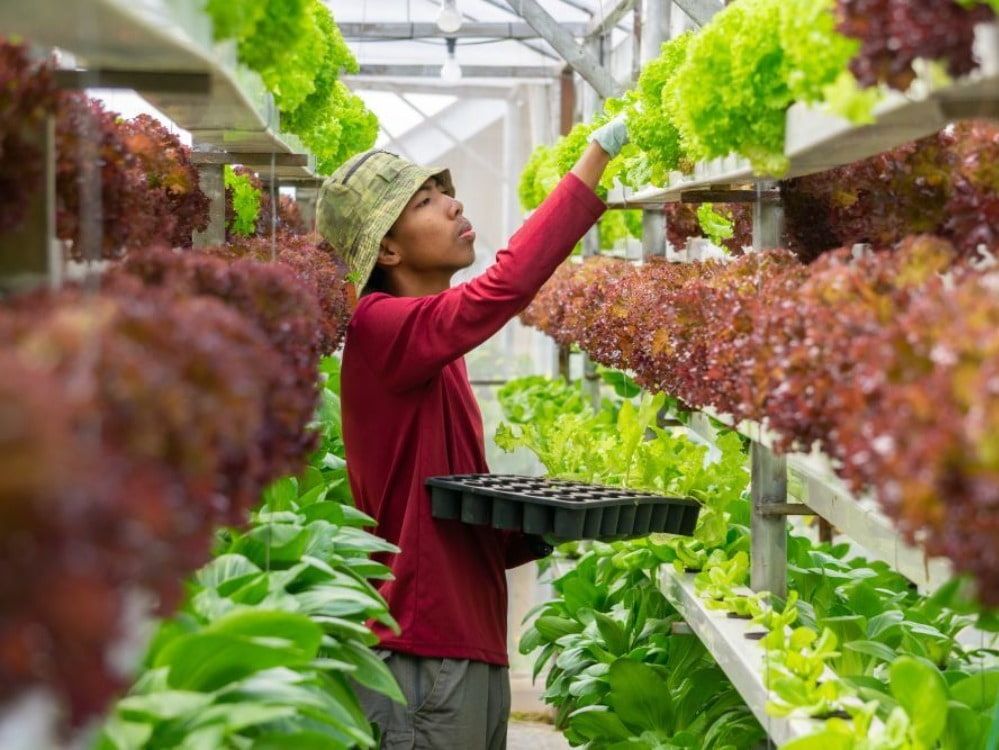
Asia’s Rise in Vertical Farming: Feeding Cities from the Sky
🌱 What is Vertical Farming?
Vertical farming is the practice of growing crops in stacked layers, often inside controlled environments such as skyscrapers, warehouses, or shipping containers. Using hydroponics, aeroponics, and LED lighting, vertical farms maximize space efficiency and reduce reliance on traditional farmland.
🌍 Why Asia is Leading the Way
Asia’s rapid urbanization, limited arable land, and growing populations have made vertical farming an attractive solution. With cities expanding and farmland shrinking, governments and entrepreneurs are investing heavily in this technology to ensure food security.
Key Drivers of Growth
- Urban density: Megacities like Tokyo, Singapore, and Shanghai need local food production to reduce imports.
- Climate challenges: Extreme weather and water scarcity push countries toward controlled-environment agriculture.
- Government support: Policies and subsidies encourage innovation in sustainable farming.
- Tech integration: Asia’s strong tech ecosystem accelerates adoption of AI, robotics, and IoT in farming.
🚀 Innovations in Vertical Farming Across Asia
- Singapore: Known as a global leader, Singapore has invested in vertical farms to reduce dependence on imports, aiming for 30% local food production by 2030.
- Japan: Companies use robotics and AI to manage vertical farms producing lettuce and herbs with minimal human labor.
- China: Large-scale vertical farms integrate smart sensors and blockchain for transparent supply chains.
- South Korea: Indoor farms powered by renewable energy supply fresh produce to urban supermarkets.
🌱 Benefits of Vertical Farming
- Space efficiency: Crops are grown in stacked layers, maximizing limited urban land.
- Water savings: Hydroponic systems use up to 90% less water than traditional farming.
- Reduced transport costs: Food is grown closer to consumers, cutting emissions and ensuring freshness.
- Year-round production: Controlled environments allow continuous harvests regardless of climate.
- Food security: Countries reduce reliance on imports and strengthen resilience against global supply chain disruptions.
⚖️ Challenges Ahead
- High costs: Infrastructure, energy, and technology investments remain expensive.
- Energy demand: LED lighting and climate control systems require significant electricity.
- Scaling issues: Making vertical farming affordable for smallholder farmers is still a challenge.
- Consumer acceptance: Educating consumers about the safety and benefits of vertically farmed produce is essential.
🌟 The Future Vision
Asia’s rise in vertical farming signals a new era of urban agriculture. Imagine skyscrapers doubling as food factories, rooftop farms supplying fresh greens to local markets, and AI-driven systems ensuring every plant thrives. With innovation and policy support, vertical farming could become a cornerstone of Asia’s food security strategy—feeding millions sustainably while reshaping the urban skyline.

DONATE & HELP FEED THE WORLD- PRESS THE LINK BELOW AND DONATE- https://www.paypal.com/donate/?hosted_button_id=XBTLE4H5G322N
Your support helps AgriHelpAfrica share sustainable farming practices with the world, one post at a time. Together, we can cultivate resilience, empower farmers, and grow a future where agriculture thrives and feed’s the world .


Leave a Reply