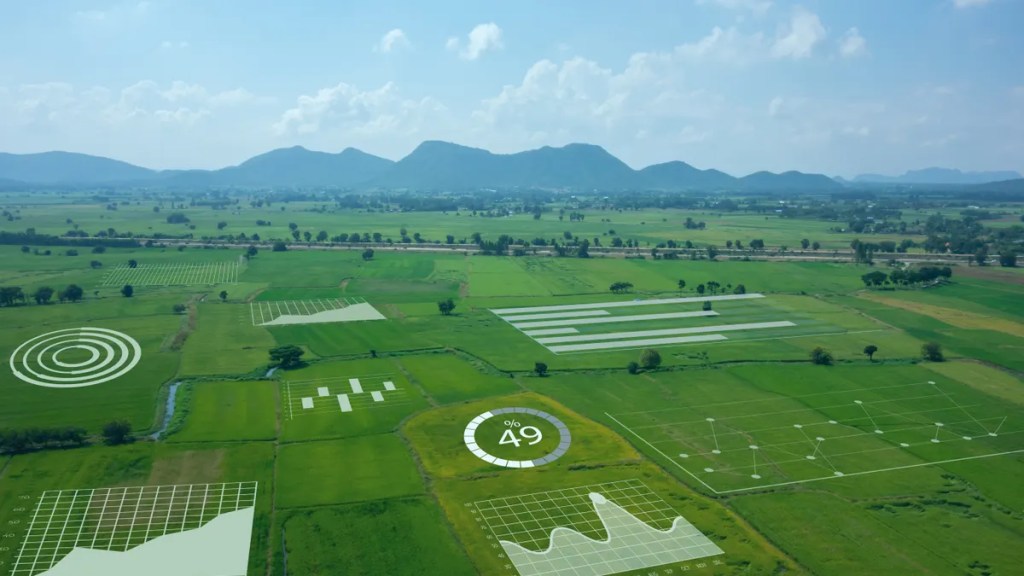
Digital Twins in Agriculture: Virtual Farming for Real-World Impact
🌱 What Are Digital Twins?
Digital twins are virtual replicas of physical systems, built using real-time data, sensors, and advanced modeling. In agriculture, they simulate farms, crops, livestock, and even supply chains. By mirroring the real world, digital twins allow farmers to test scenarios, predict outcomes, and optimize operations—all without risking actual resources.
🛰️ How Digital Twins Work in Farming
- Data collection: Sensors, drones, and satellites gather information on soil, weather, crop growth, and livestock health.
- Virtual modeling: This data feeds into a digital twin—a dynamic, computer-based model of the farm.
- Simulation: Farmers can run “what-if” scenarios, such as testing irrigation schedules or predicting pest outbreaks.
- Decision-making: Insights from the digital twin guide real-world actions, improving efficiency and sustainability.
🚀 Benefits of Digital Twins
- Optimized resource use: Farmers can simulate irrigation, fertilizer application, and crop rotation to minimize waste.
- Risk reduction: Predicting pest outbreaks, disease spread, or climate shocks allows proactive interventions.
- Yield forecasting: Digital twins provide accurate predictions of harvest outcomes, aiding logistics and market planning.
- Cost savings: Testing strategies virtually reduces trial-and-error in the field.
- Sustainability: Modeling carbon footprints and water use helps align with eco-friendly practices.
🌍 Global Applications
- Europe: Smart farming projects use digital twins to simulate crop growth under different climate scenarios.
- Asia: Rice farmers integrate satellite data into digital twins to optimize water use in paddy fields.
- United States: Agritech companies build livestock digital twins to monitor animal health and predict productivity.
- Africa: Pilot projects use digital twins to help smallholder farmers plan planting schedules and manage soil fertility.
⚖️ Challenges Ahead
- Data quality: Inaccurate or incomplete data can lead to unreliable simulations.
- Cost barriers: Advanced sensors and modeling platforms may be expensive for small-scale farmers.
- Digital divide: Limited internet access in rural areas hinders adoption.
- Training needs: Farmers require support to interpret and act on digital twin insights.
🌟 The Future Vision
Digital twins are set to revolutionize agriculture by turning farms into smart, adaptive ecosystems. Imagine a farmer running a simulation of next season’s crop yields before planting, or a livestock manager predicting animal health outcomes weeks in advance. With digital twins, agriculture moves from reactive to proactive—ensuring resilience, profitability, and sustainability in a changing world.

DONATE & HELP FEED THE WORLD- PRESS THE LINK BELOW AND DONATE- https://www.paypal.com/donate/?hosted_button_id=XBTLE4H5G322N
Your support helps AgriHelpAfrica share sustainable farming practices with the world, one post at a time. Together, we can cultivate resilience, empower farmers, and grow a future where agriculture thrives and feed’s the world .


Leave a Reply