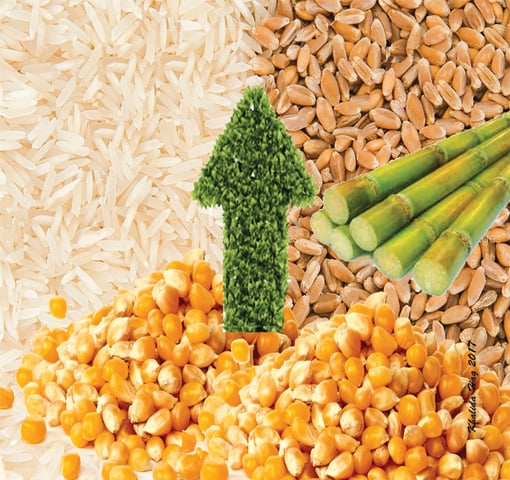
Future of Staple Crops: Rice, Wheat, and Maize
🌍 Why Staple Crops Matter
Rice, wheat, and maize are the backbone of global food security. Together, they provide more than half of the world’s caloric intake. As populations grow and climate pressures intensify, the future of these crops will determine whether humanity can sustainably feed billions.
🌱 Rice: Feeding Asia and Beyond
- Climate challenges: Rice cultivation is highly water-intensive, making it vulnerable to droughts and shifting rainfall patterns.
- Innovation: Researchers are developing drought-resistant and salt-tolerant rice varieties to adapt to changing climates.
- Sustainability push: Alternate wetting and drying techniques reduce methane emissions from flooded paddies.
- Future outlook: Rice will remain central to Asian diets, but production methods must evolve to balance yield with environmental impact.
🌾 Wheat: The Global Breadbasket
- Geopolitical pressures: Wheat trade is sensitive to conflicts and export bans, as seen in recent years.
- Climate adaptation: Heat-tolerant wheat varieties are being bred to withstand rising global temperatures.
- Technology integration: Precision agriculture and AI-driven forecasting help farmers optimize yields.
- Future outlook: Wheat will continue to dominate in Europe, North America, and parts of Asia, but resilience against climate shocks will be critical.
🌽 Maize: Versatile and Demanded Worldwide
- Dual role: Maize is both a staple food and a key input for animal feed and biofuels.
- Climate resilience: Breeding programs focus on drought-tolerant and pest-resistant varieties.
- Market dynamics: Rising demand for meat and dairy increases maize consumption through livestock feed.
- Future outlook: Maize’s versatility ensures strong demand, but balancing food, feed, and fuel uses will be a challenge.
🚀 Emerging Trends Across Staple Crops
- Biotechnology: Gene editing (like CRISPR) accelerates the development of climate-resilient varieties.
- Digital farming: AI, drones, and sensors improve efficiency and reduce waste.
- Sustainability: Pressure to reduce emissions and conserve water drives innovation in farming practices.
- Global trade shifts: Emerging economies will play a larger role in both production and consumption.
⚖️ Challenges Ahead
- Climate change: Extreme weather threatens yields and stability.
- Resource scarcity: Water and fertile land are under increasing pressure.
- Equity issues: Smallholder farmers may struggle to access new technologies.
- Policy frameworks: Governments must balance food security with environmental sustainability.
🌟 The Future Vision
Rice, wheat, and maize will remain indispensable, but their future lies in innovation, resilience, and sustainability. By embracing biotechnology, smarter farming, and greener practices, humanity can ensure these staple crops continue to nourish billions while protecting the planet.

DONATE & HELP FEED THE WORLD- PRESS THE LINK BELOW AND DONATE- https://www.paypal.com/donate/?hosted_button_id=XBTLE4H5G322N
Your support helps AgriHelpAfrica share sustainable farming practices with the world, one post at a time. Together, we can cultivate resilience, empower farmers, and grow a future where agriculture thrives and feed’s the world .
 AGRIHELPAFRICA
Leave a comment