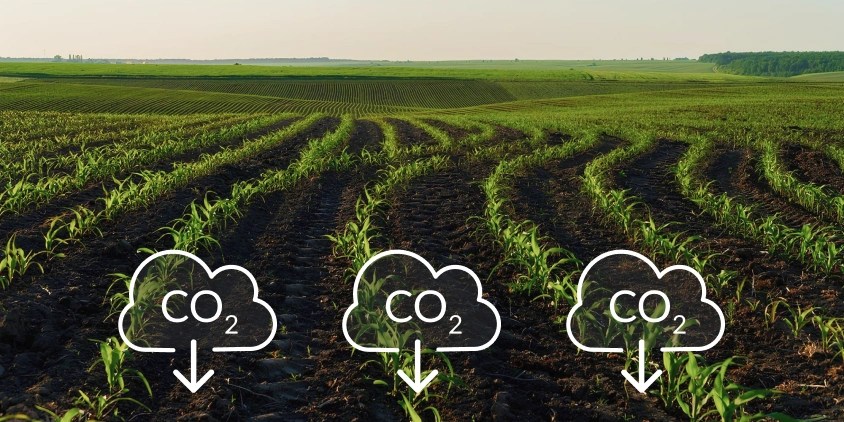
Carbon Credits for Farmers: Turning Sustainability into Opportunity
🌱 What Are Carbon Credits?
Carbon credits are tradable certificates that represent the reduction or removal of one metric ton of carbon dioxide (CO₂) or its equivalent from the atmosphere. Farmers can earn these credits by adopting sustainable practices that capture carbon or reduce emissions, and then sell them to companies or governments seeking to offset their carbon footprints.
🚜 How Farmers Can Earn Carbon Credits
- Soil carbon sequestration: Practices like no-till farming, cover cropping, and crop rotation help store carbon in the soil.
- Agroforestry: Planting trees alongside crops or pastures captures carbon while improving biodiversity.
- Methane reduction: Improved livestock management and manure treatment lower methane emissions.
- Renewable energy adoption: Installing solar panels or biogas digesters reduces reliance on fossil fuels.
- Efficient fertilizer use: Precision agriculture minimizes nitrous oxide emissions from fertilizers.
💡 Benefits for Farmers
- New income streams: Selling carbon credits provides additional revenue beyond crop and livestock sales.
- Market access: Farmers who adopt sustainable practices may gain preferential access to eco-conscious buyers.
- Resilience: Healthier soils and diversified systems improve farm productivity and climate resilience.
- Recognition: Participation in carbon markets positions farmers as key players in global climate solutions.
🌍 Global Examples
- United States: Programs like Indigo Ag and Nori connect farmers to carbon markets.
- Africa: Initiatives support smallholder farmers in adopting agroforestry and regenerative practices.
- Europe: The EU’s Common Agricultural Policy incentivizes carbon-friendly farming.
- Australia: Farmers participate in government-backed carbon credit schemes tied to land management.
⚖️ Challenges Ahead
- Verification costs: Measuring and certifying carbon reductions can be expensive.
- Market volatility: Carbon credit prices fluctuate, affecting farmer revenues.
- Knowledge gaps: Farmers need training to adopt and maintain sustainable practices.
- Equity concerns: Smallholder farmers may struggle to access carbon markets compared to large agribusinesses.
🌟 The Future Vision
Carbon credits offer farmers a chance to monetize sustainability while contributing to global climate goals. As carbon markets mature, transparent verification systems and supportive policies will be crucial to ensure fairness and accessibility. Imagine a future where every farm is not only a source of food but also a carbon sink, helping balance the planet’s climate equation.

DONATE & HELP FEED THE WORLD- PRESS THE LINK BELOW AND DONATE- https://www.paypal.com/donate/?hosted_button_id=XBTLE4H5G322N
Your support helps AgriHelpAfrica share sustainable farming practices with the world, one post at a time. Together, we can cultivate resilience, empower farmers, and grow a future where agriculture thrives and feed’s the world .
 AGRIHELPAFRICA
Leave a comment