Aquaponics Systems Explained: A Sustainable Food Revolution
🌱 What is Aquaponics?
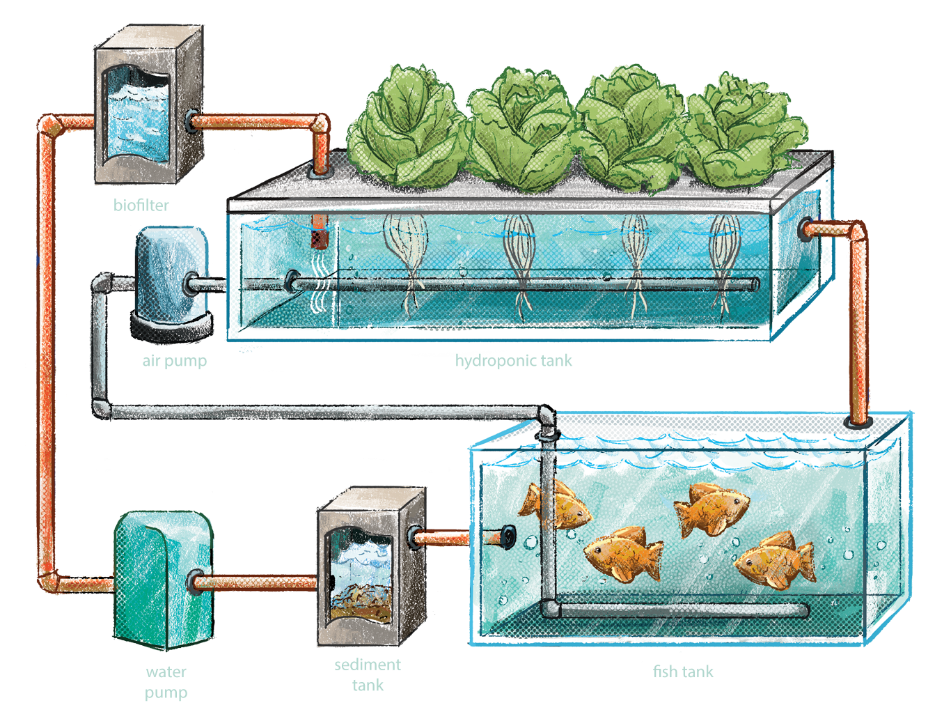
Aquaponics is a closed-loop farming system that combines aquaculture (raising fish) with hydroponics (growing plants without soil). In this symbiotic setup:
- Fish produce waste rich in ammonia.
- Beneficial bacteria convert ammonia into nitrates.
- Plants absorb these nitrates as nutrients, cleaning the water.
- The clean water cycles back to the fish tanks.
This creates a self-sustaining ecosystem where fish and plants thrive together.
🐟 + 🌿 How It Works Step by Step
- Fish tanks: Fish such as tilapia, catfish, or trout are raised.
- Biofilter: Bacteria break down fish waste into plant-friendly nutrients.
- Grow beds: Plants like lettuce, basil, or tomatoes absorb nutrients from the water.
- Water circulation: Pumps move water between tanks and grow beds, keeping the system balanced.
🚀 Benefits of Aquaponics
- Water efficiency: Uses up to 90% less water than traditional farming.
- No chemical fertilizers: Fish waste naturally nourishes plants.
- Year-round production: Controlled environments allow continuous harvests.
- Dual yield: Produces both fresh vegetables and fish protein.
- Urban adaptability: Systems can be set up in warehouses, rooftops, or backyards.
🌍 Real-World Applications
- Community projects: Schools and neighborhoods use aquaponics for education and local food supply.
- Commercial farms: Large-scale aquaponics operations provide fresh produce to supermarkets.
- Disaster resilience: Compact systems can support food security in regions with limited arable land.
⚖️ Challenges to Consider
- Startup costs: Pumps, tanks, and grow lights require investment.
- Technical knowledge: Balancing fish health and plant growth takes skill.
- Energy use: Systems need electricity for pumps and lighting.
- Species selection: Not all fish or plants are suitable for aquaponics.
🌟 The Future of Aquaponics
Aquaponics represents a vision of sustainable urban farming, where cities can produce their own food locally, reduce reliance on imports, and minimize environmental impact. As technology advances, aquaponics could become a cornerstone of resilient food systems worldwide.

DONATE & HELP FEED THE WORLD- PRESS THE LINK BELOW AND DONATE- https://www.paypal.com/donate/?hosted_button_id=XBTLE4H5G322N
Your support helps AgriHelpAfrica share sustainable farming practices with the world, one post at a time. Together, we can cultivate resilience, empower farmers, and grow a future where agriculture thrives and feed’s the world .
 AGRIHELPAFRICA
Leave a comment