
DONATE & HELP FEED THE WORLD- PRESS THE LINK BELOW AND DONATE- https://www.paypal.com/donate/?hosted_button_id=XBTLE4H5G322N
Your support helps AgriHelpAfrica share sustainable farming practices with the world, one post at a time. Together, we can cultivate resilience, empower farmers, and grow a future where agriculture thrives and feed’s the world .
🌿 Hydroponics in Urban Spaces: Growing Food Without Soil
🌍 Why Hydroponics Matters in Cities
- Urban areas face limited land availability and rising food demand.
- Hydroponics—growing plants without soil using nutrient-rich water—offers a space-efficient solution for city dwellers.
- It reduces dependence on rural supply chains and promotes local, fresh, and sustainable food production.
💧 What is Hydroponics?
Hydroponics is a farming method where plants grow in water infused with essential nutrients instead of soil. Roots are supported by inert mediums like coconut coir, perlite, or clay pellets, while nutrient solutions provide everything the plant needs.
🌱 Benefits of Hydroponics in Urban Spaces
- Space Efficiency: Vertical hydroponic towers and rooftop systems maximize limited urban land.
- Water Savings: Uses up to 90% less water than traditional farming.
- Year-Round Production: Controlled environments allow continuous harvests regardless of season.
- Reduced Transport Costs: Food is grown closer to consumers, cutting down on carbon emissions.
- High Yields: Plants grow faster and produce more due to optimized nutrient delivery.
🛠️ Popular Hydroponic Systems for Cities
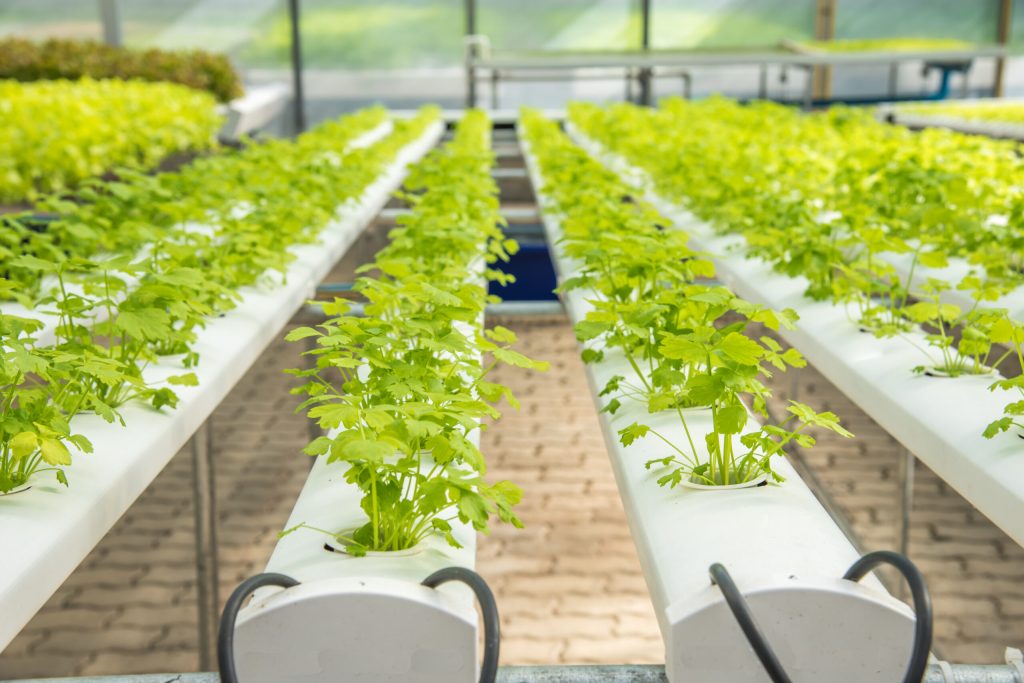
1. Nutrient Film Technique (NFT)
- Thin film of nutrient solution flows over plant roots.
- Ideal for leafy greens like lettuce and spinach.
2. Deep Water Culture (DWC)
- Plant roots are suspended in oxygenated nutrient water.
- Simple and cost-effective for beginners.
3. Vertical Towers
- Plants stacked in vertical columns, saving space.
- Perfect for rooftops, balconies, and indoor gardens.
4. Aeroponics
- Roots are misted with nutrient solution.
- Highly efficient but requires advanced equipment.
📊 Comparison of Hydroponic Systems
| System | Space Use | Water Efficiency | Best Crops |
|---|---|---|---|
| NFT | Medium | High | Leafy greens |
| DWC | Low | Medium | Herbs, lettuce |
| Vertical | Very High | High | Mixed crops |
| Aeroponics | High | Very High | High-value crops |
⚖️ Challenges & Considerations
- Initial setup costs can be high for advanced systems.
- Requires technical knowledge to manage nutrient balance and pH.
- Dependence on electricity for pumps and lights.
- Market acceptance—consumers may need education about hydroponic produce.
✅ Conclusion
Hydroponics is transforming urban spaces into green food hubs. By growing crops vertically, indoors, or on rooftops, cities can reduce food insecurity, save water, and promote sustainability. With the right investment and training, hydroponics can make fresh, healthy food accessible to millions of urban residents.
DONATE & HELP FEED THE WORLD- PRESS THE LINK BELOW AND DONATE- https://www.paypal.com/donate/?hosted_button_id=XBTLE4H5G322N
Your support helps AgriHelpAfrica share sustainable farming practices with the world, one post at a time. Together, we can cultivate resilience, empower farmers, and grow a future where agriculture thrives and feed’s the world .
 AGRIHELPAFRICA
Leave a comment