
DONATE & HELP FEED THE WORLD- PRESS THE LINK BELOW AND DONATE- https://www.paypal.com/donate/?hosted_button_id=XBTLE4H5G322N
Your support helps AgriHelpAfrica share sustainable farming practices with the world, one post at a time. Together, we can cultivate resilience, empower farmers, and grow a future where agriculture thrives and feed’s the world .
🔄 Circular Water Use in Farming: Closing the Loop for Sustainability
🌍 Why Circular Water Use Matters
- Agriculture is the largest consumer of freshwater globally, accounting for nearly 70% of withdrawals.
- With rising water scarcity, farmers must shift from linear water use (take → use → dispose) to circular systems that recycle and reuse water.
- Circular water use ensures efficiency, resilience, and sustainability, helping farmers adapt to climate change while protecting ecosystems.
💧 What is Circular Water Use?
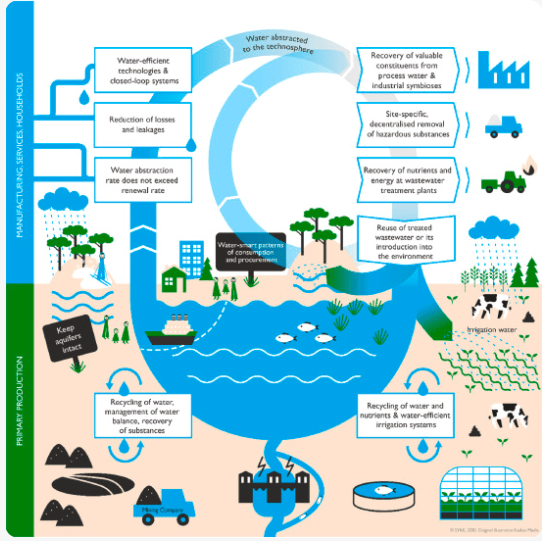
Circular water use in farming means capturing, treating, and reusing water multiple times within the agricultural system. Instead of discarding wastewater, farmers integrate it back into production—reducing waste and maximizing every drop.
🌱 Key Strategies for Circular Water Use
1. Wastewater Recycling
- Treated wastewater from households or industries can be reused for irrigation.
- Advanced filtration and bio-treatment systems make water safe for crops.
- Reduces dependence on freshwater sources.
2. Nutrient Recovery
- Wastewater often contains nutrients like nitrogen and phosphorus.
- Farmers can recycle these nutrients through constructed wetlands or bio-digesters, turning waste into fertilizer.
3. Closed-Loop Irrigation Systems
- Recirculating systems capture runoff water from fields or greenhouses.
- Water is filtered and pumped back into irrigation lines.
- Especially effective in hydroponics and greenhouse farming.
4. Rainwater Integration
- Rainwater harvesting complements circular systems by adding fresh inputs.
- Stored rainwater can be blended with recycled water for irrigation.
5. Aquaculture–Agriculture Integration
- Fish farming water, rich in nutrients, can be reused for crop irrigation.
- Creates a symbiotic loop where crops benefit from fish waste, and fish benefit from clean water cycles.
📊 Benefits of Circular Water Use
| Benefit | Impact on Farming |
|---|---|
| Water Efficiency | Cuts water use by up to 40% |
| Cost Savings | Reduces pumping and sourcing costs |
| Soil Health | Nutrient-rich recycled water improves fertility |
| Climate Resilience | Ensures water availability during droughts |
| Environmental Protection | Minimizes pollution and runoff into rivers |
⚖️ Challenges & Considerations
- Initial investment in treatment systems can be high.
- Requires training and monitoring to ensure water safety for crops.
- Regulatory frameworks may limit wastewater reuse in some regions.
- Farmers need community or cooperative models to share costs and infrastructure.
✅ Conclusion
Circular water use is more than a farming technique—it’s a mindset shift toward sustainability. By recycling, reusing, and integrating water flows, farmers can secure their harvests, reduce costs, and protect the environment. In a world where every drop counts, circular water systems are the future of resilient agriculture.
DONATE & HELP FEED THE WORLD- PRESS THE LINK BELOW AND DONATE- https://www.paypal.com/donate/?hosted_button_id=XBTLE4H5G322N
Your support helps AgriHelpAfrica share sustainable farming practices with the world, one post at a time. Together, we can cultivate resilience, empower farmers, and grow a future where agriculture thrives and feed’s the world .
 AGRIHELPAFRICA
Leave a comment