
DONATE & HELP FEED THE WORLD- PRESS THE LINK BELOW AND DONATE- https://www.paypal.com/donate/?hosted_button_id=XBTLE4H5G322N
Your support helps AgriHelpAfrica share sustainable farming practices with the world, one post at a time. Together, we can cultivate resilience, empower farmers, and grow a future where agriculture thrives and feed’s the world .
🌧️ Rainwater Harvesting for Agriculture: Turning Drops into Yields
Why Rainwater Harvesting Matters
- Agriculture depends heavily on water, yet climate change and erratic rainfall are making water supplies less reliable.
- Farmers in drought-prone regions often face crop losses due to water scarcity.
- Rainwater harvesting offers a low-cost, sustainable solution to capture and store water for farming needs.
💧 What is Rainwater Harvesting?
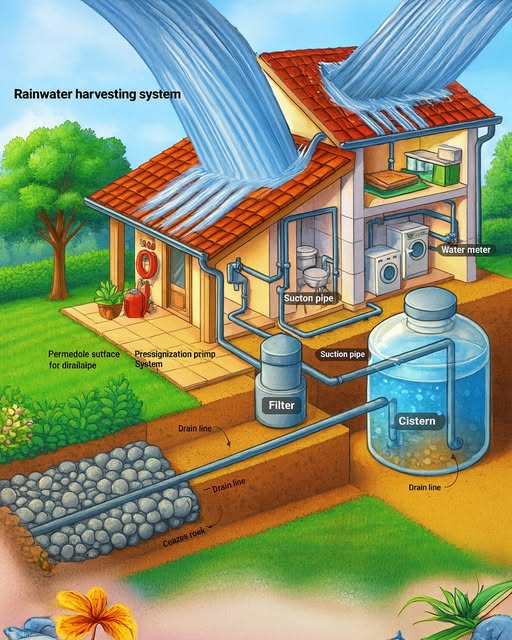
Rainwater harvesting is the practice of collecting and storing rainwater from rooftops, fields, or catchment areas for later use. Instead of letting rainfall run off, farmers can channel it into tanks, ponds, or underground reservoirs.
🌱 Benefits for Farmers
- Reliable water supply during dry spells.
- Reduced dependence on boreholes, rivers, or expensive irrigation systems.
- Improved crop yields by ensuring water availability at critical growth stages.
- Soil conservation—reduces erosion by controlling runoff.
- Cost-effective compared to drilling wells or pumping groundwater.
🛠️ Methods of Rainwater Harvesting in Agriculture
1. Rooftop Collection
- Rainwater is collected from roofs and stored in tanks.
- Useful for smallholder farmers with limited land.
2. Farm Ponds
- Excavated ponds store rainwater for irrigation.
- Can be lined with clay or plastic to reduce seepage.
3. Check Dams & Bunds
- Small barriers built across streams or slopes slow down water flow.
- Helps recharge groundwater and store water for later use.
4. Underground Tanks & Cisterns
- Rainwater is directed into underground storage structures.
- Keeps water cool and reduces evaporation losses.
5. Contour Trenches & Terraces
- Trenches dug along slopes capture rainwater and reduce runoff.
- Improves soil moisture and prevents erosion.
📊 Comparison of Rainwater Harvesting Methods
| Method | Cost Level | Water Storage Capacity | Best Use Case |
|---|---|---|---|
| Rooftop Collection | Low | Small–Medium | Homesteads, small farms |
| Farm Ponds | Medium | Large | Crop irrigation |
| Check Dams & Bunds | Medium–High | Medium–Large | Community farming, groundwater recharge |
| Underground Tanks | Medium | Medium | Areas with high evaporation |
| Contour Trenches | Low | Small | Sloping lands, soil conservation |
⚖️ Challenges & Considerations
- Initial investment may be high for larger structures.
- Requires maintenance to prevent contamination and leakage.
- Effectiveness depends on rainfall reliability—less useful in arid zones with minimal rain.
- Farmers need training and support to implement systems effectively.
✅ Conclusion
Rainwater harvesting is a game-changer for sustainable agriculture. By capturing and storing rainwater, farmers can secure their crops against drought, reduce reliance on groundwater, and build resilience to climate change. With proper planning and community support, every drop of rain can be turned into a source of life for farms.
DONATE & HELP FEED THE WORLD- PRESS THE LINK BELOW AND DONATE- https://www.paypal.com/donate/?hosted_button_id=XBTLE4H5G322N
Your support helps AgriHelpAfrica share sustainable farming practices with the world, one post at a time. Together, we can cultivate resilience, empower farmers, and grow a future where agriculture thrives and feed’s the world .
 AGRIHELPAFRICA
Leave a comment