
DONATE & HELP FEED THE WORLD- PRESS THE LINK BELOW AND DONATE- https://www.paypal.com/donate/?hosted_button_id=XBTLE4H5G322N
Your support helps AgriHelpAfrica share sustainable farming practices with the world, one post at a time. Together, we can cultivate resilience, empower farmers, and grow a future where agriculture thrives and feed’s the world .
CRISPR and Gene-Edited Crops: Reshaping the Future of Food
🌱 What is CRISPR?
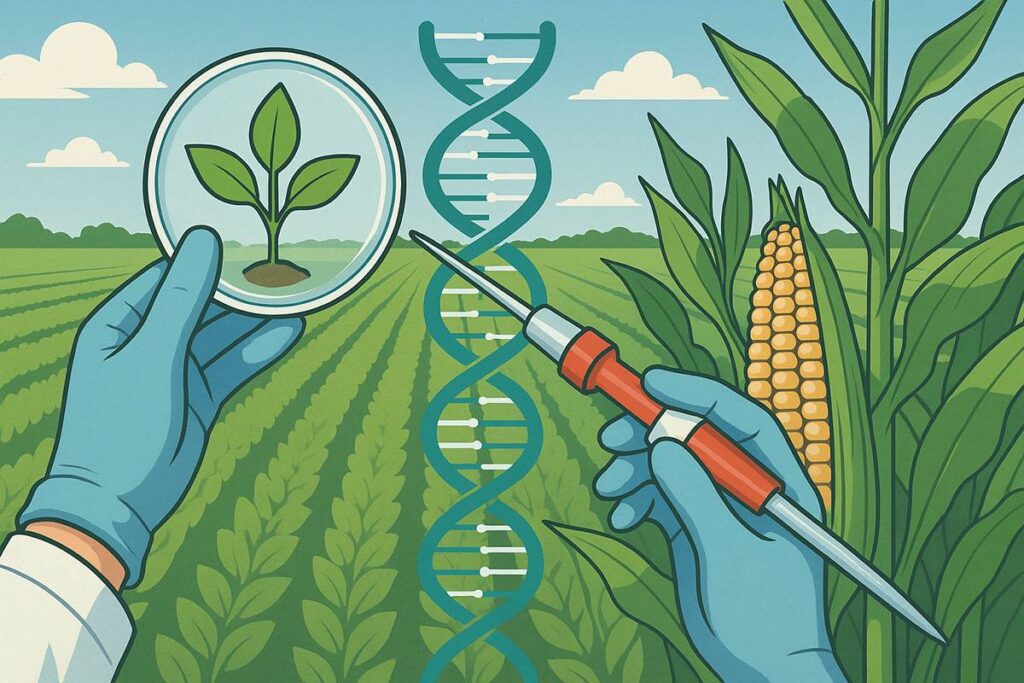
CRISPR (Clustered Regularly Interspaced Short Palindromic Repeats) is a revolutionary genome-editing tool that allows scientists to make highly targeted changes to DNA. Unlike traditional genetic modification, which often involves inserting foreign genes, CRISPR enables precise edits within a plant’s own genetic code. This makes it faster, cheaper, and more accurate than previous methods.
🌾 Why Gene-Edited Crops Matter
Agriculture faces mounting challenges: climate change, soil degradation, pests, and rising global food demand. Gene-edited crops offer solutions by:
- Improving yield: Crops can be engineered to produce more food per acre.
- Enhancing resilience: Plants can be made resistant to drought, heat, and flooding.
- Boosting nutrition: Edits can increase vitamins, minerals, and protein content.
- Reducing chemical use: Pest-resistant crops lower reliance on pesticides.
Sources:
🌍 Real-World Applications
CRISPR is already being applied to staple crops:
- Rice: Edited for higher yields and resistance to bacterial blight.
- Wheat: Modified to resist powdery mildew and improve gluten quality.
- Maize: Enhanced drought tolerance and pest resistance.
- Tomatoes: Adjusted for longer shelf life and better flavor.
These innovations are not just scientific milestones—they directly address food insecurity in regions most vulnerable to climate change.
⚖️ Benefits vs. Challenges
| Aspect | Benefits | Challenges |
|---|---|---|
| Precision | Accurate edits reduce unintended effects | Regulatory frameworks still evolving |
| Speed | Faster crop development than traditional breeding | Public skepticism about “GMOs” |
| Sustainability | Reduced pesticide use and environmental impact | Ethical debates on altering nature |
| Food Security | Resilient crops for growing populations | Access limited in developing nations |
Sources:
🚜 The Road Ahead
Experts believe CRISPR could be the cornerstone of sustainable agriculture. By 2030, gene-edited crops may become mainstream, helping farmers adapt to climate extremes while feeding billions more people. However, success depends on transparent regulation, public trust, and equitable access to technology.
CRISPR is not just a scientific tool—it’s a potential lifeline for global food security. The question is not whether we should use it, but how we can ensure it benefits everyone, from smallholder farmers to large-scale producers.
DONATE & HELP FEED THE WORLD- PRESS THE LINK BELOW AND DONATE- https://www.paypal.com/donate/?hosted_button_id=XBTLE4H5G322N
Your support helps AgriHelpAfrica share sustainable farming practices with the world, one post at a time. Together, we can cultivate resilience, empower farmers, and grow a future where agriculture thrives and feed’s the world .
 AGRIHELPAFRICA
Leave a comment