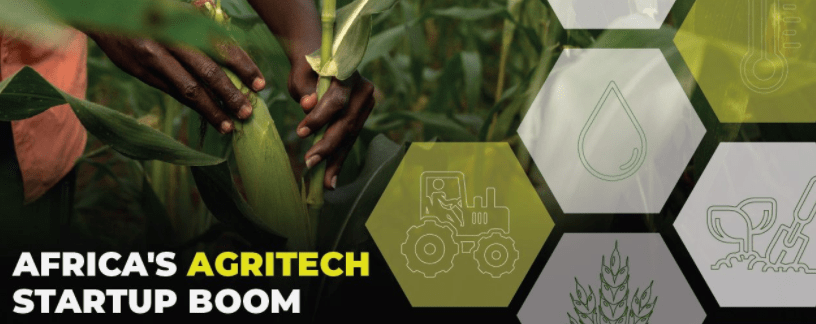
🌍 Introduction: Agriculture Meets Technology
Agriculture contributes 30–40% of Africa’s GDP and provides livelihoods for more than 50% of its population. Yet farmers face persistent challenges: low mechanization, limited access to finance, and climate change. Enter agri-tech startups—dynamic ventures using digital tools, data, and innovation to transform farming into a modern, scalable industry.
🚜 The Rise of Agri-Tech in Africa
Between 2014 and 2024, over 700 agri-tech startups raised more than $1.56 billion in funding. Countries like Kenya, Nigeria, Ghana, and South Africa dominate the sector, with hubs of innovation emerging across East, West, and Southern Africa. These startups are not only solving local problems but also attracting global investors eager to support Africa’s agricultural revolution.
🌱 Examples of Game-Changing Startups
- Hello Tractor (Nigeria) Dubbed the “Uber for tractors,” Hello Tractor connects smallholder farmers to affordable mechanization services, boosting productivity and reducing labor costs.
- Farmerline (Ghana) Provides farmers with mobile-based advisory services, weather updates, and access to inputs, helping them make data-driven decisions.
- Komaza (Kenya) A micro-forestry startup that empowers smallholder farmers to grow trees for sustainable timber markets.
- Twiga Foods (Kenya) Streamlines food distribution by connecting farmers directly to vendors through a digital marketplace, reducing waste and improving farmer incomes.
- Aerobotics (South Africa) Uses drone and AI technology to monitor crop health, detect pests, and optimize yields.
- Hurudza Plus (Zimbabwe) Works as your digital agronomist, your agronomist in your phone, helps with AI powered agronomic services and soil and plant health analysis tool
🌟 Why Agri-Tech Matters
- Mechanization Access: Platforms like Hello Tractor bridge the gap for smallholder farmers.
- Financial Inclusion: Startups provide digital wallets, microloans, and market access.
- Climate Resilience: IoT sensors, drones, and data analytics help farmers adapt to unpredictable weather.
- Market Efficiency: Digital marketplaces reduce middlemen, ensuring fairer prices for farmers.
🌾 Challenges Ahead
Despite rapid growth, agri-tech startups face hurdles:
- Scalability: Many solutions remain localized and struggle to expand regionally.
- Infrastructure gaps: Limited internet access and electricity in rural areas.
- Farmer adoption: Training and trust-building are essential for widespread use.
🌍 Conclusion: Africa’s Agri-Tech Future
Agri-tech startups are proving that Africa’s agricultural challenges can be solved with innovation, collaboration, and investment. By empowering farmers with tools for mechanization, data, and market access, these ventures are laying the foundation for a resilient, food-secure continent. The next decade could see Africa not just feeding itself, but becoming a global agricultural powerhouse.
POWERED BY HURUDZA PLUS, DOWNLOAD THE HURUDZA PLUS APP HERE – https://www.appcreator24.com/app1994476-8fty24
 AGRIHELPAFRICA
Leave a comment